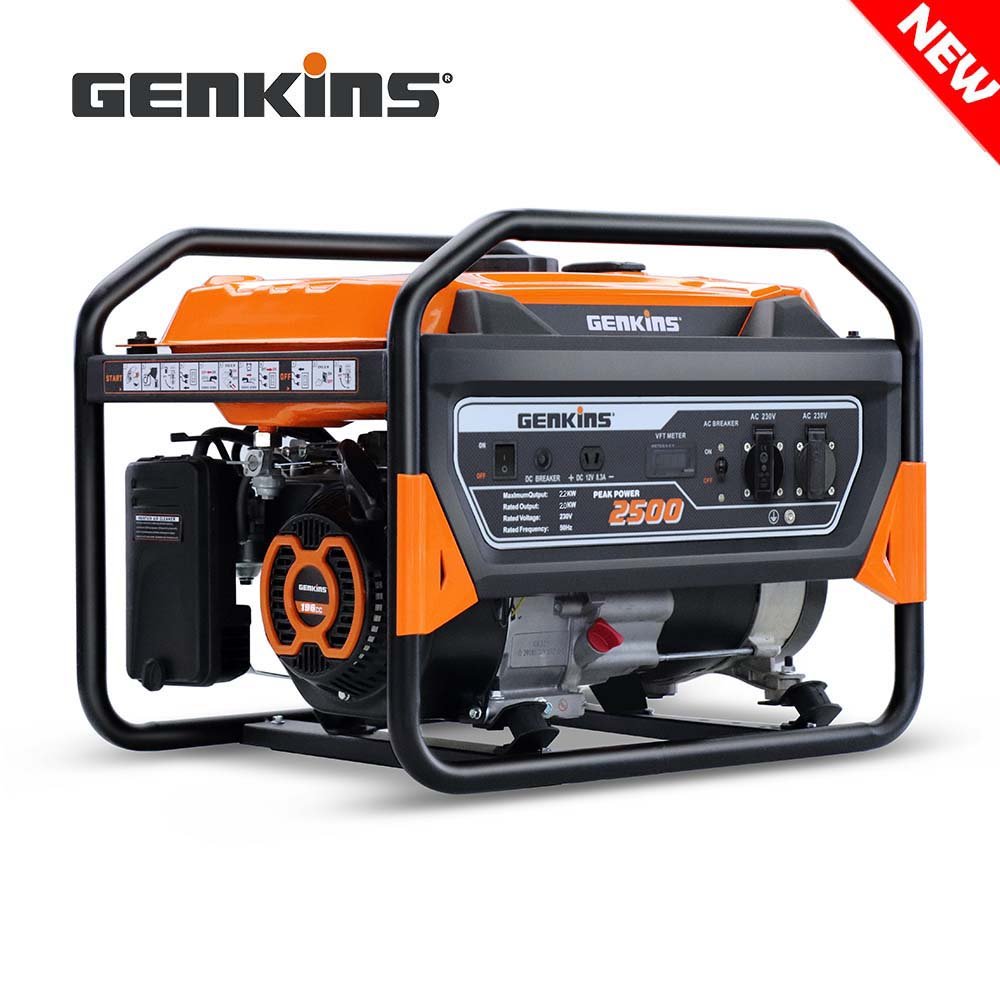
Imagine the quiet hum of electricity during a blackout, the gentle glow of lights when neighbors are plunged into darkness, or the steady buzz of tools powering your remote project. This isn't magic; it's the reliable utility of a portable power solution, and for many, an Introduction to 2500W Generators is their first step into this world of self-reliance. These versatile units strike a sweet spot, offering enough juice for critical essentials without the bulk or expense of larger generators.
Whether you're prepping for unexpected outages, heading off-grid for a camping adventure, or tackling a DIY project far from an outlet, understanding what a 2500-watt generator can do – and its limitations – is key to making the most of your portable power.
At a Glance: Your 2500W Generator Quick Takeaways
- What it is: A portable power unit providing 2500 watts of continuous power (running watts), with a higher surge capacity for starting demanding devices.
- Why you need one: Essential for backup power during outages, powering outdoor events, or running tools at remote work sites.
- Fuel flexibility: Typically runs on gasoline, propane, or convenient dual-fuel systems.
- What it can run: Capable of handling smaller window AC units, refrigerators, microwaves (intermittently), TVs, laptops, and various power tools.
- Key consideration: Always factor in both an appliance's "running watts" (continuous power) and "starting watts" (initial surge) to avoid overloading.
- Safety first: Always operate outdoors in well-ventilated areas, use proper extension cords, and refuel only when cool.
Understanding Your Power Partner: What is a 2500W Generator?
At its core, a 2500-watt generator is a compact, portable power station designed to provide electricity wherever you need it. Think of it as your personal mini power plant, ready to kick into action when the grid fails or no grid exists. These units are engineered to deliver 2500 watts of power continuously, which we refer to as running watts. This is the steady stream of electricity your devices need to operate once they're already on.
But here's a crucial distinction: most generators also have a higher starting watts (often called surge watts) rating. This momentary burst of extra power is specifically for appliances with electric motors – like refrigerators, air conditioners, or power tools – which demand a significant jolt of energy to get going. A 2500-watt generator's ability to handle these short, high-demand spikes without tripping an overload is what defines its true utility. It typically offers at least 2200 running watts, ensuring a robust foundation for your power needs.
Many models offer fuel versatility, commonly running on gasoline, propane, or even a dual-fuel setup, giving you options based on availability and preference. Whether you're considering a new purchase or exploring how to best utilize your existing unit, understanding this dual wattage rating is your first step toward confident generator use.
The Power Punch: What a 2500W Generator Can Run
So, with 2500 watts at your disposal (and a healthy surge capacity), what kind of heavy lifting can your generator do? The answer is quite a bit for its size, making it a popular choice for both emergencies and leisure.
This class of generator is well-suited for powering essential household appliances during an outage, or providing comfort and convenience for outdoor activities. You can typically expect to run:
- Smaller AC Systems: Many smaller window air conditioners (around 5,000 BTU) or certain RV air conditioning units (like an 11,000 BTU model) are within its starting and running capabilities.
- Kitchen Staples: Your refrigerator and a microwave (used intermittently to avoid overloading with other high-draw items) are definite possibilities.
- Worksite Tools: Certain circular saws or other medium-duty electric tools can be powered, especially if you're mindful of their starting watt requirements.
- Entertainment & Connectivity: Televisions, laptops, charging phones, and other small electronics are easily handled, often with plenty of headroom for other appliances.
- Home Essentials: Items like a sump pump, a few lights, and even a dishwasher can often run, though you'll need to carefully manage simultaneous usage.
The key here is "simultaneously." A 2500-watt generator offers a flexible power canvas, allowing you to run a mix of small to medium-sized appliances. For instance, running a refrigerator, a sump pump, a TV, and a dishwasher together is often feasible, provided their combined running watts don't exceed your generator's continuous capacity and you manage their starting sequences.
Calculating Your Needs: The Wattage Walkthrough
The most critical skill in owning any generator is understanding how to match its output to your appliances. Overloading your generator isn't just an inconvenience; it can damage both the generator and your devices. Here's a straightforward approach to determine what your 2500-watt generator can reliably power:
Step-by-Step Power Planning
- List Your Essentials: Begin by making a comprehensive list of every appliance, tool, or device you anticipate needing to run. Think about "must-haves" during an outage or "primary tools" for a job.
- Uncover the Wattage Ratings: For each item on your list, find its running watts (continuous power) and starting watts (initial surge). This information is usually on a label on the appliance itself, in its user manual, or available online. If you can't find it, consider using a wattage meter for accuracy.
- Sum the Running Watts: Add up the running watts of all the devices you plan to operate at the same time. Your generator's continuous running watt capacity (ideally at least 2200 watts for a 2500W unit) must be greater than or equal to this sum. This is your baseline.
- Account for the Biggest Starting Wattage: This is where many people go wrong. To ensure your generator can handle the "startup jolt," take your total running watts from step 3 and add the single highest starting wattage requirement from any device on your list. This combined total must remain below your generator's total 2500-watt capacity. This calculation provides a more flexible scenario, assuming you don't start multiple high-surge items at once.
- Strategize Staggered Startups (Advanced): For even more control, especially with multiple motor-driven appliances, order your devices from highest peak (starting + running) watts to lowest. Plan to start them one at a time, allowing each to stabilize before introducing the next. This minimizes the chance of simultaneous surges overwhelming your generator.
By following these steps, you create a clear power budget, empowering you to use your 2500-watt generator efficiently and safely.
Appliance Deep Dive: Specifics on What Gets Powered
Understanding general capabilities is one thing; knowing how specific devices interact with a 2500W generator is another. Here’s a closer look at common appliances and their typical power demands, helping you fine-tune your power plan.
| Appliance/Device | Typical Running Watts | Typical Starting Watts | 2500W Generator Suitability |
|---|---|---|---|
| Refrigerators | 600-800W | 1200-2200W | Good for many models. Most standard refrigerators can be powered, but verify your specific model's starting watts to ensure it's within the generator's surge capacity. Avoid simultaneously starting other high-draw devices. |
| Microwaves | 600-1000W | 1000-1200W | Can power. Useful for quick heating. Best used intermittently and not simultaneously with other major appliances that demand high running watts, like a window AC. |
| Televisions & Related | 100-500W | N/A | Easily powered. Flatscreen TVs (approx. 120W), older tube TVs (approx. 300W), gaming consoles, and charging devices consume minimal power, leaving plenty of room for other essentials. |
| Small Window AC (5000 BTU) | 1400-1500W | 2200-2600W | Might start, but tight. A 2500W generator's surge capacity might handle the starting watts of a 5000 BTU AC. However, sustained use, especially alongside other devices, can strain the generator. Consider it a priority appliance if used. |
| RV AC (11,000 BTU) | 1010W | ~1600W | Can run some models. Many 11,000 BTU RV air conditioners are within the starting and running limits. Always check your specific RV AC unit's wattage. |
| RV AC (13,500 BTU) | >1200W | >2500W | Generally not suitable. These units typically require more than 2500 starting watts, making them too powerful for this generator class. |
| RV AC (5,500 BTU) | <1000W | <1000W | Generally can run. These smaller units are well within a 2500W generator's capabilities. |
| Electric Heaters | ~1500W | ~1500W | Feasible for short periods/one at a time. Electric heaters are high continuous draw devices. You can likely run one, but it will consume a large portion of your generator's running watts, limiting what else can operate simultaneously. |
| Electric Water Heaters | ~4500W | N/A | Insufficient. Electric water heaters are major power hogs, typically requiring around 4500 watts continuously. A 2500W generator is not nearly powerful enough for these. |
| Laptops & Small Elec. | <300W | N/A | Consume minimal power. Laptops, phone chargers, LED lights, and other small electronic devices can easily run simultaneously with other essential appliances without stressing the generator. |
| Furnace Fan Blower | ~300-600W | ~600-1200W | Likely can start 1/3 HP models. A 2500W generator is often strong enough to power the blower fan for a gas furnace. It is typically not powerful enough for a full electric furnace or the entire furnace system if it has complex starting requirements beyond just the fan. |
| Skill Saws | 1000-1500W | ~2300W | Can run some models. Some skill saws have starting wattages around 2300W, making them borderline. Check your specific saw's ratings; others might be too demanding. Only run one power tool at a time, especially if it's motor-driven. |
| Freezers | ~200W | ~1800W | Can run many models. Similar to refrigerators, freezers have a relatively low running wattage but require a significant starting surge. Many models are compatible with a 2500W generator's capabilities. |
| Campers/RVs | Varies | Varies | Capability depends on specific devices. A 2500W generator is often a good match for smaller campers or RVs where only a limited selection of small to medium appliances (like lights, a small AC, fridge, TV) are used at any given time. Prioritize and manage your load carefully. Explore 2500 watt generator options |
Real-World Scenarios: Putting 2500 Watts to Work
Let's illustrate how a 2500-watt generator can manage a practical load during an outage:
Scenario A: Essential Home Comfort (Total Running Watts: ~2100W)
- Refrigerator: 800 running watts
- Microwave (intermittently): 1000 watts (only run when other major appliances are off or in a stable state)
- TV and laptop: 300 watts combined
- A few LED lights: Minimal additional draw
In this setup, your generator provides sufficient power for crucial refrigeration, communication, and a bit of comfort. You would operate the microwave strategically, knowing its burst of power needs consideration. Attempting to run a window AC unit and the microwave simultaneously, however, would likely cause an overload.
Scenario B: Remote Worksite Power (Total Running Watts: Varies based on tool use) - Circular Saw (intermittent use): ~1500 running watts (2300 starting watts for some models)
- Work Lights: 200 watts
- Battery Chargers for Cordless Tools: 100-200 watts
Here, the focus is on powering tools sequentially. You wouldn't run the circular saw and another high-draw tool at the same instant. The generator allows for productive work, but requires conscious power management.
Maximizing Your Generator's Potential: Optimal Usage Strategies
A 2500-watt generator is a powerful asset, but its true value comes from how smartly you use it. Here are actionable tips to get the most out of your unit:
- Prioritize Ruthlessly: During an outage, distinguish between "needs" and "wants." Focus on essential appliances first (e.g., refrigerator, medical devices, furnace fan). The coffee maker might have to wait.
- Stagger Appliance Startups: This is crucial for devices with electric motors. Don't flip everything on at once. Start your refrigerator, let it run for a minute, then perhaps turn on a light, and so on. This prevents multiple high starting watt demands from hitting the generator simultaneously and causing an overload.
- Embrace Energy Efficiency: Where possible, use energy-efficient devices. LED lights consume far less power than incandescent bulbs. Energy-Star rated appliances, while still having starting watts, are generally more efficient in their continuous running state. This frees up precious watts for other devices.
- Regular Maintenance is Non-Negotiable: Just like a car, your generator needs TLC. Check oil levels, clean air filters, and perform recommended service. A well-maintained generator runs more efficiently and reliably when you need it most.
- Protect Sensitive Electronics: Always use power strips with built-in surge protectors for sensitive devices like laptops, TVs, and gaming consoles. While a generator provides power, it's not always as "clean" as grid power, and surges can occur.
Fueling Your Choice: Runtime and Fuel Types
The longevity of your generator's operation hinges on its fuel efficiency and tank size. For gasoline models, you can typically expect a runtime of 8-12 hours on a full tank when operating at 50% load. This sweet spot of efficiency balances power output with fuel consumption.
Propane options (or dual-fuel models utilizing propane) can sometimes offer longer runtimes or at least a cleaner burn with less maintenance. Propane also has a longer shelf life than gasoline, making it a good choice for emergency backup.
Regardless of your fuel choice, safe storage is paramount. Keep fuel in approved containers, away from living areas and ignition sources. When estimating usage, consider your expected power needs and how long you'll likely run the generator. Having extra fuel on hand, stored safely, is always a wise precaution.
Safety First: Essential Generator Operating Practices
While incredibly useful, generators demand respect and adherence to strict safety guidelines to prevent accidents, injuries, or even fatalities.
- Operate Outdoors ONLY: This is the golden rule. Generators produce carbon monoxide (CO), an odorless, colorless, and deadly gas. Never run a generator in a garage, basement, shed, or any enclosed or partially enclosed area, even with windows or doors open. Position it at least 20 feet from your home, with the exhaust directed away from windows and doors.
- Keep It Dry: Always protect your generator from rain, snow, and excessive moisture. Moisture can lead to electrical hazards. If you need to operate it in wet conditions, use a generator tent or canopy designed for safe outdoor use, ensuring proper ventilation.
- Use the Right Cords: Employ heavy-duty, outdoor-rated extension cords that are specifically designed to handle the power load you're drawing. Ensure the cord's wattage or amperage rating matches or exceeds the load of the appliances it powers. Inspect cords for damage before each use.
- Refuel Safely: Never refuel a hot or running generator. Turn off the unit and allow it to cool down completely before adding fuel. Spilled fuel on a hot engine can ignite, leading to severe burns or fires.
- Install CO Detectors: For added peace of mind, ensure your home has working carbon monoxide detectors, especially if you're using a generator during an outage.
- Avoid Backfeeding: Never plug your generator directly into a wall outlet. This practice, known as backfeeding, can send power back into the utility lines, endangering utility workers and potentially neighbors. If you need to power your home's electrical system, have a qualified electrician install a transfer switch.
Choosing the Right 2500W Generator for Your Needs
A 2500-watt generator is a versatile powerhouse for managing everyday electrical demands and preparing for the unexpected. You've now got the tools to understand its capabilities, calculate your specific power needs, and operate it safely.
When considering your options, think about:
- Fuel Type: Do you prefer the convenience of gasoline, the longer storage of propane, or the flexibility of a dual-fuel system?
- Noise Level: Are you using it in a residential area or a remote campsite where noise is a concern?
- Portability: How often will you move it, and how important is a lightweight design with wheels?
- Features: Do you need an electric start, a robust control panel, or specific outlet configurations?
By weighing these factors against your specific circumstances and applying the knowledge of running and starting watts, you'll be well-equipped to choose a 2500-watt generator that serves you reliably for years to come.