When the lights go out, the job site needs juice, or your campsite demands more than just a campfire glow, a 2500W generator often steps in as the hero. This compact powerhouse isn't designed to run your entire mansion, but for essential powering needs and a surprising range of applications, it's an incredibly versatile and reliable tool. Understanding its capabilities—and its limits—is the key to unlocking its full potential and ensuring you're never left in the dark, literally or figuratively.
At a Glance: Your 2500W Generator Quick Takeaways
- Core Capability: Provides 2500 continuous running watts, with a higher surge capacity (often 3000-3500 watts) for starting motor-driven appliances.
- Versatile: Ideal for home backup essentials, camping, small job sites, outdoor events, and critical medical devices.
- Not for Everything: Won't power a whole house or high-demand appliances like electric water heaters or central AC.
- Key Concept: Differentiate between "running watts" (continuous power) and "starting watts" (initial surge).
- Smart Usage: Prioritize appliances, stagger startups, and always operate safely outdoors.
- Fuel Options: Commonly runs on gasoline, propane, or dual-fuel for flexibility.
The Heart of the Matter: Understanding Your 2500W Powerhouse
At its core, a 2500-watt generator is a portable energy source, ready to pick up the slack when grid power isn't available or sufficient. Think of it as a robust mini-power plant, perfect for situations that demand reliable, accessible electricity without the bulk or cost of larger units. Its portability makes it a favorite for those who need power on the go or for temporary setups.
What truly defines a generator's capability are two crucial terms: running watts and starting watts.
- Running Watts: This is the continuous power your generator can supply, in this case, 2500 watts. It’s the steady output needed to keep devices operating once they've started.
- Starting Watts (or Surge Watts): Many appliances, especially those with electric motors (like refrigerators, air conditioners, or power tools), require a significantly higher burst of energy to kick on for a few seconds. A 2500W generator will typically offer a surge capacity of 3000 to 3500 watts to handle these initial spikes. Failing to account for starting watts can lead to an overloaded generator that trips off.
This distinction is vital because while your generator might support a device's running wattage, it must first successfully handle its starting wattage. Balancing these needs is central to effective generator use. If you're looking to delve deeper into the mechanics and options, you can learn about 2500 watt generators in more detail.
Beyond the Basics: Real-World 2500W Generator Use Cases
A 2500W generator truly shines in specific scenarios, offering a sweet spot between raw power and convenient portability. Let's break down where this reliable workhorse proves its worth.
1. Home Comfort During Outages
When a storm knocks out power, a 2500W generator can keep your essential household items humming. It's not about powering every gadget, but rather maintaining critical functions.
- Food Preservation: Running your refrigerator (600-800 running watts, 1200-2200 starting watts) is often the top priority. A 2500W unit can handle this, though you'll want to avoid simultaneously starting other high-draw appliances.
- Basic Lighting & Communication: Keep a few LED lights (10-100 watts) on, charge your phones and laptops (50-100 watts each), and perhaps power a TV (50-500 watts) for news or entertainment.
- Small Appliances: Make coffee (600-1200 watts) in the morning or heat up a quick meal in the microwave (600-1200 running watts, 1000-1200 starting watts) – but remember to use the microwave intermittently and solo.
- Temperature Regulation: A small window air conditioner (e.g., 5000 BTU, 1200-1500 running watts, 2000-2600 starting watts) can often be run, or a portable electric heater (1000-1500 watts) for a single room. Just remember, these are significant draws and will limit what else you can run concurrently.
The goal here isn't luxury, but rather maintaining a reasonable level of comfort and functionality until grid power returns.
2. Adventure Awaits: Camping & RV Power
For outdoor enthusiasts, a 2500W generator is a game-changer, providing creature comforts far beyond roughing it.
- Essential RV Needs: It can power most basic RV necessities: interior lights, the RV's small refrigerator, charging ports, and perhaps a fan.
- Outdoor Cooking: Run a small electric grill or smoker (1000-1800 watts) to elevate your campsite culinary experience.
- Entertainment: Power a portable projector for movie nights under the stars or keep your speakers charged for music.
This generator size hits a sweet spot for many campers, offering enough power for convenience without being overly bulky or loud for a peaceful outdoor setting.
3. On the Job: Portable Power for Work Sites
Construction workers, contractors, and DIY enthusiasts often find a 2500W generator indispensable for projects away from readily available outlets.
- Common Power Tools: It can power various handheld tools: drills (~600 watts), power sanders (800-1200 watts), and even circular saws (1200-1800 watts) or electric chainsaws (1000-1800 watts).
- Air Compressors: Small portable air compressors (~1000 watts) for pneumatic tools can often run, though you'll need to watch the starting watts.
The key on a job site is to limit simultaneous use of high-wattage tools. For example, don't run a circular saw and an electric chainsaw at the exact same time. It's about sequential use to manage the load effectively.
4. Outdoor Events & Gatherings
Hosting a party, tailgate, or outdoor market? A 2500W generator can provide the necessary spark.
- Lighting: String lights, floodlights, or decorative lighting for ambiance and safety.
- Sound Systems: Power speakers or a small PA system for music or announcements.
- Food Prep & Service: Run blenders for drinks, warming trays for food, or even a small popcorn machine.
- Vendors: Provide power for essential equipment for market stalls or food trucks with modest needs.
This size generator is often quiet enough (especially inverter models) not to detract from the event, making it a popular choice.
5. Critical Lifelines: Powering Essential Medical Devices
For those relying on medical equipment, a generator can literally be a lifeline.
- CPAP Machines: Most CPAP machines (30-100 watts) require very little power and can run for extended periods.
- Oxygen Concentrators: Standard oxygen concentrators (350-600 watts) are well within the 2500W generator's capacity, providing crucial peace of mind during outages.
In these critical scenarios, knowing your generator's reliability and understanding safety guidelines for generator operation becomes paramount.
What Can a 2500W Generator Really Power? (The Nitty-Gritty)
Let's get specific about common household and work devices. Remember, the total running wattage of everything plugged in at once must stay below 2500 watts. For items with motors, remember their starting watts!
| Appliance/Device | Running Watts (Approx.) | Starting Watts (Approx.) | Notes |
|---|---|---|---|
| Refrigerator (Standard) | 600-800 | 1200-2200 | Prioritize, avoid other large draws during startup. |
| Microwave Oven | 600-1200 | 1000-1200 | Use intermittently, typically not with other high-watt items. |
| Television (LED) | 50-200 | - | Varies by size and type. |
| Laptop/Phone Charger | 50-100 | - | Minimal impact. |
| Coffee Maker | 600-1200 | - | Use after refrigerator has started. |
| LED Lights (per bulb) | 10-20 | - | Very efficient, can run many. |
| Small Window AC (5000 BTU) | 1200-1500 | 2000-2600 | Feasible, but will consume most of the generator's capacity. |
| Portable Electric Heater | 1000-1500 | - | One unit for short periods; very high draw. |
| Circular Saw | 1200-1800 | - | Limit simultaneous use with other high-wattage tools. |
| Electric Drill | ~600 | - | Easily powered. |
| Power Sander | 800-1200 | - | Easily powered. |
| Electric Chainsaw | 1000-1800 | - | Limit simultaneous use. |
| Portable Air Compressor | ~1000 | - | Check specific model's starting watts. |
| CPAP Machine | 30-100 | - | Very low draw, excellent for extended use. |
| Oxygen Concentrator | 350-600 | - | Reliable for critical medical needs. |
| Small Electric Grill/Smoker | 1000-1800 | - | Great for camping/outdoor events. |
| (Note: Electric water heaters (around 4500 watts) are far too high-demand for a 2500W generator.) | |||
| To make the most of your generator, you might want to understand how to calculate your personal wattage needs to create a prioritized list for your specific situation. |
Maximizing Your 2500W Generator's Potential: Smart Usage Strategies
Having a generator is one thing; using it wisely is another. These strategies will help you get the most out from your 2500W unit and avoid common pitfalls.
Prioritize & Conserve
During an outage, you can't run everything. Decide what's truly essential and stick to it. Turn off lights when leaving a room, unplug chargers for devices that are already full, and avoid energy hogs like hair dryers or clothes irons. Opt for LED lighting which consumes significantly less power than traditional incandescent bulbs.
Staggering Startups
This is arguably the most important tip for managing a generator. High starting watts can overload your unit. Plug in and start your highest wattage appliance (like a refrigerator) first, let it run for a minute or two, then plug in and start the next highest, and so on. This prevents multiple high surge demands from hitting the generator at the same time.
Fuel Management: The Lifeline of Your Generator
Your generator's runtime is directly tied to its fuel capacity and the load it's carrying. A 2500W gasoline generator might run 8-12 hours on a full tank at 50% load.
- Estimate Needs: Consider how long you anticipate needing power and have enough fuel safely stored.
- Dual-Fuel Advantage: Many 2500W generators are dual-fuel, running on both gasoline and propane. Propane offers a longer shelf life and cleaner burn, while gasoline might be more readily available. This flexibility can be a huge advantage. Thinking about the options? Explore the benefits of dual-fuel generators.
Regular Maintenance: Keep it Running Strong
Like any engine, generators need love. Regular maintenance ensures reliability and fuel efficiency.
- Check Oil: Before each use and periodically during extended operation.
- Inspect Air Filter: Clean or replace as needed.
- Spark Plug: Inspect and replace if fouled or worn.
- Fuel Stabilizer: Use for gasoline if storing the generator for long periods.
- Run It Monthly: Start and run your generator for 15-20 minutes under a light load at least once a month to keep fluids circulating and components lubricated. This preventative step can save a lot of headaches when you truly need it.
Protection for Sensitive Electronics
While generators provide power, the quality of that power can sometimes fluctuate. For sensitive electronics like laptops, TVs, or medical devices, use power strips with built-in surge protectors. This adds a layer of defense against potential voltage spikes or irregularities.
Safety First: Non-Negotiable Rules for Generator Operation
Operating a generator isn't complicated, but it demands strict adherence to safety protocols. Skipping these steps can have severe consequences.
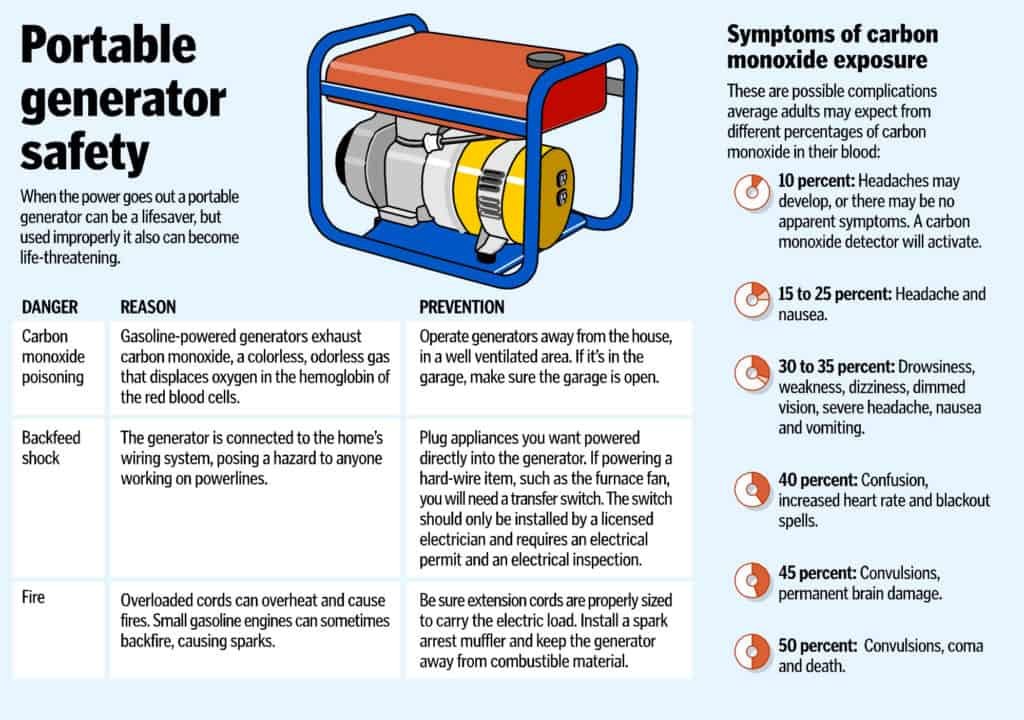
- Operate Outdoors ONLY: This is the golden rule. Generators produce carbon monoxide (CO), an odorless, colorless, and deadly gas. Never run a generator in a garage, basement, shed, or any enclosed or partially enclosed space. Keep it at least 20 feet away from windows, doors, and vents to prevent fumes from entering your home.
- Keep it Dry: Water and electricity are a dangerous mix. Never operate a generator in rain, snow, or wet conditions without proper overhead protection (like an open-sided canopy) that still allows for ample ventilation.
- Use Proper Cords: Always use heavy-duty, outdoor-rated extension cords that are the correct gauge for the power load and distance. Overloaded or undersized cords can overheat, leading to fire or electrical shock. Ensure cords are in good condition, without frays or damage.
- Refueling Safety: Turn off the generator and allow it to cool completely before adding fuel. Hot engine parts can ignite spilled gasoline vapors, leading to a fire or explosion. Always refuel in a well-ventilated area, away from ignition sources.
- Grounding: Check your generator's manual for specific grounding requirements. Many generators require grounding to prevent electrical shock.
- Carbon Monoxide Detectors: Even with outdoor operation, it's wise to have battery-operated CO detectors installed inside your home, especially near sleeping areas, as an added layer of safety.
Choosing Your 2500W Generator: Beyond the Watts
While the wattage is crucial, other factors contribute to the overall utility and user experience of a 2500W generator.
- Noise Levels: Generators, especially conventional open-frame models, can be noisy. If you're using it for camping, tailgating, or during a neighborhood outage, a quieter inverter generator (often below 60 dB) might be a better choice. Check the decibel rating before you buy.
- Weight & Portability: A 2500W generator is typically designed to be portable. Check its weight and dimensions. Some models come with wheels and telescoping handles, making transport significantly easier. If you plan to move it frequently, lighter is better.
- Fuel Type: As mentioned, gasoline is common, but dual-fuel (gasoline and propane) offers flexibility. Electric start features also add convenience.
- Outlets: Ensure the generator has the types and number of outlets you need (e.g., standard 120V AC, USB ports).
Looking to compare options? You can compare top portable generators to find the perfect fit for your needs.
Common Questions About 2500W Generators
Can a 2500W generator run my entire house?
No, generally not. A 2500W generator is designed for essential circuits and select appliances, not to power an entire modern home, which often requires 5000-10000+ watts or more for full functionality (including central AC, electric ranges, electric water heaters). It's best for critical loads.
How long will a 2500W generator run on a tank of fuel?
Runtime varies significantly based on the fuel tank size, the load placed on the generator, and its efficiency. A typical 2500W gasoline generator might run 8-12 hours at a 50% load on a full tank (around 1-1.5 gallons). At higher loads, runtime will decrease.
Are 2500W generators loud?
It depends on the type. Conventional open-frame generators tend to be louder (70+ dB), while inverter generators of the same wattage are significantly quieter (often in the 50-60 dB range), making them more suitable for noise-sensitive environments like campgrounds or residential areas.
Can I use a 2500W generator to power my well pump?
It's unlikely for most standard well pumps. Many well pumps, especially submersible ones, require substantial starting watts (often 3000-5000+ watts) and high running watts. A 2500W generator would typically be too small to reliably start and run a well pump. Always check your pump's specific wattage requirements.
Making the Most of Your 2500W Investment
A 2500W generator is more than just a piece of equipment; it's a tool for peace of mind, convenience, and emergency preparedness. By understanding its capabilities, diligently following safety protocols, and employing smart usage strategies, you'll find it an invaluable asset for home, work, and play.
Don't wait for the next outage or adventure to learn its ins and outs. Practice starting it, running it with a few appliances, and familiarizing yourself with its features. A well-maintained and properly operated 2500W generator isn't just a backup plan; it's a reliable partner ready to meet your essential powering needs, whatever comes your way.